
Selection of Christian Adoh for the Mandela Washington Fellowship 2025 in the United States
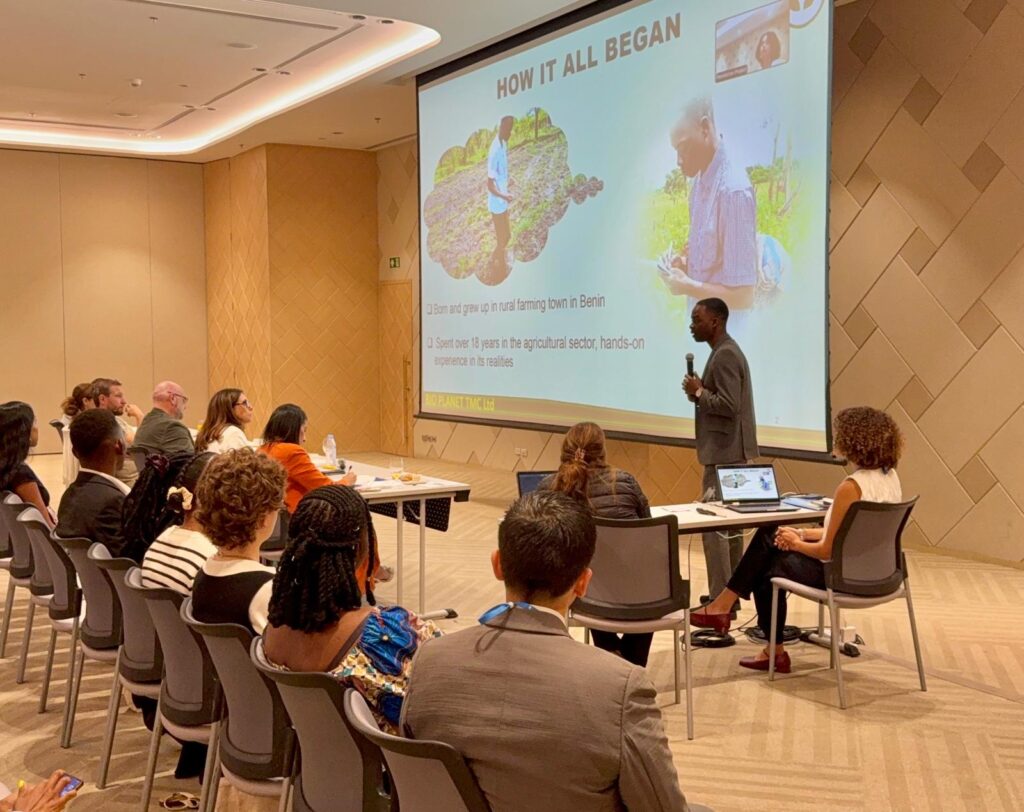
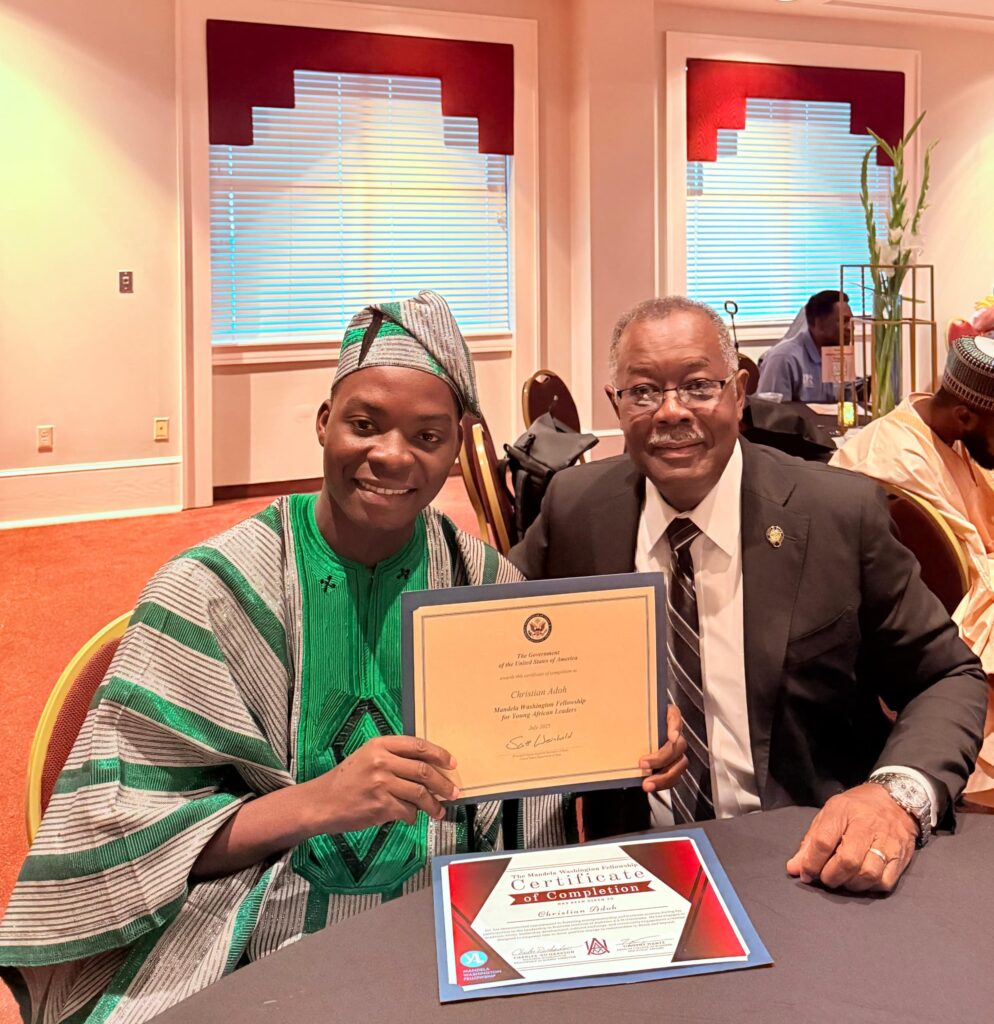
The selection of Christian Adoh, CEO of BIO PLANET TMC Ltd, for the Mandela Washington Fellowship 2025 marked a major milestone in the company’s journey toward leadership in sustainable development in West Africa. As part of this highly competitive program, which brings together exceptional young African leaders, Christian spent six weeks at a leading American university (Alabama Agricultural and Mechanical University’s School of Business) receiving advanced training in civic leadership, business innovation and community driven development. Throughout the fellowship, he engaged in deep discussions with global experts, policy makers and innovators who are shaping the continent’s future through practical, locally grounded solutions. His presence within this prestigious cohort highlighted the relevance of BIO PLANET TMC Ltd’s circular bioeconomy model and its growing impact on sustainable agriculture, youth employment and climate resilience in Benin. Beyond the academic and leadership training, the Mandela Washington Fellowship provided Christian with practical tools to strengthen the company’s organizational governance, optimize its operational systems and broaden its approach to farmer inclusion and environmental restoration. Access to high level networks created new opportunities for collaboration, partnerships and investment, supporting the company’s ambitions for expansion across West Africa. Christian’s selection stands as a recognition not only of his personal leadership but also of BIO PLANET TMC Ltd’s growing influence as a youth-led enterprise driving environmental innovation and regenerative agriculture in the region. This achievement reinforces the company’s commitment to scaling its impact and contributing to a more sustainable and equitable future for African communities.